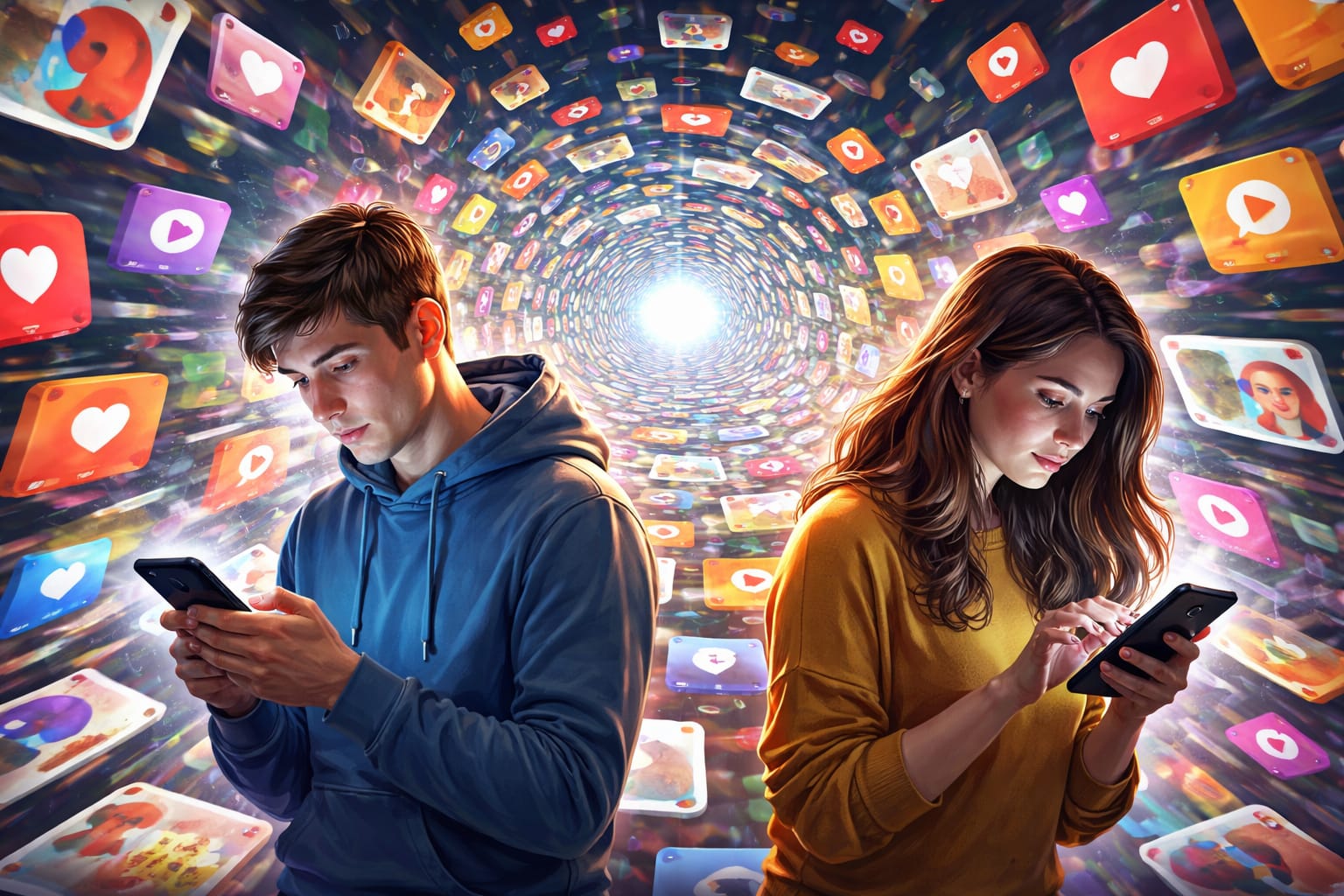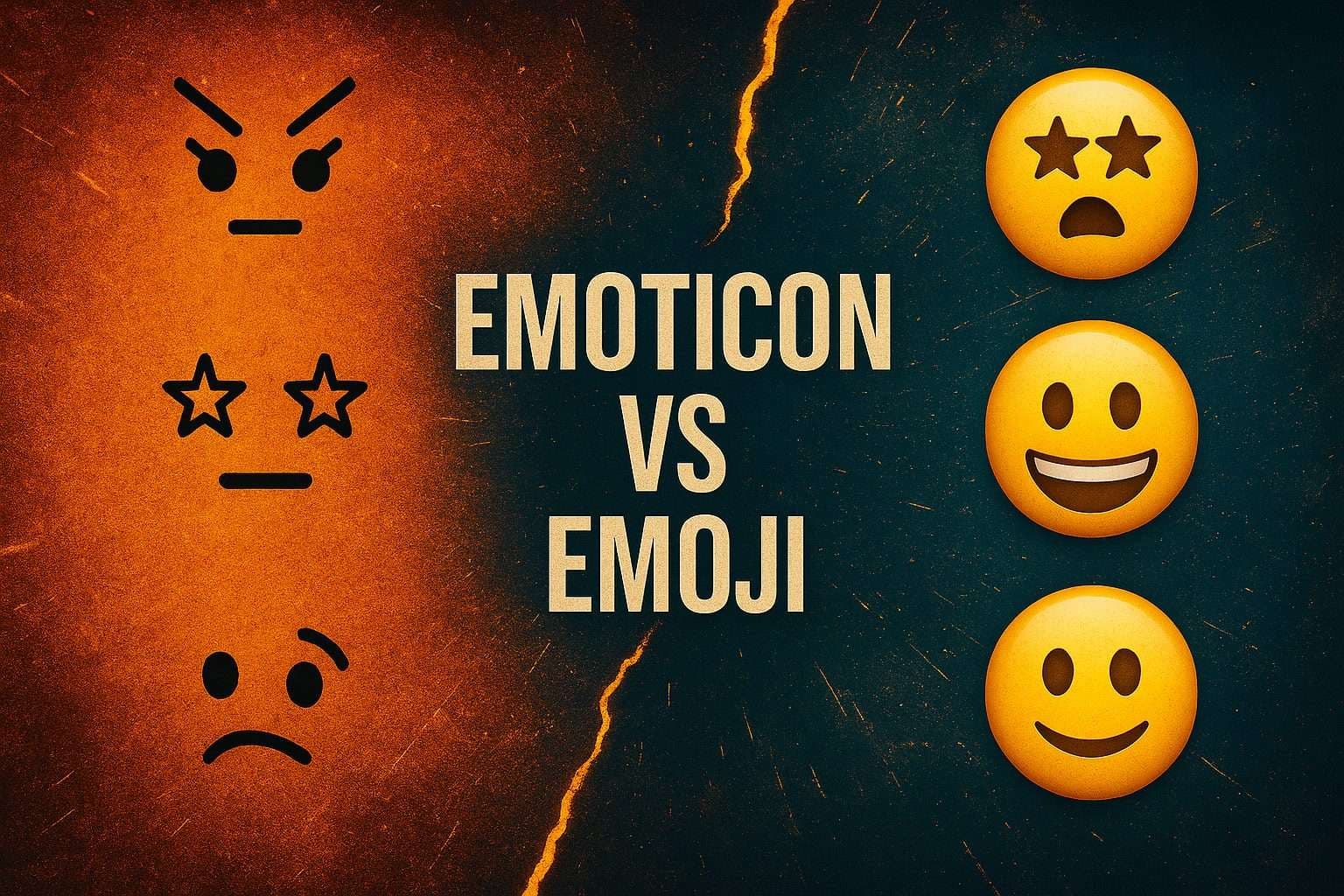
If you’ve ever typed a smiley face in chat or tapped the smiley icon on your phone, you’ve likely encountered emoticons and emojis. Many people, and even media outlets, use these terms interchangeably, but they are not the same. While both help convey emotion in digital communication, they differ in origin, format, and usage. Understanding the distinction is useful for writers, developers, content creators, and anyone curious about the evolution of online communication.
In this article, we’ll explore the history of emoticons and emojis, their usage, and why they shouldn’t be confused—even though they often fulfill the same role in a message.
Why People Use the Terms Interchangeably
At first glance, emoticons and emojis seem functionally identical. Both let users express feelings or tone quickly, whether it’s happiness 🙂, sadness 😢, surprise 😮, or a wink 😉. Because of this overlap, many casual users, and even some writers and media outlets, blur the distinction.
Several factors contribute to this confusion:
- Functional similarity: Both symbols add emotional context or nuance to plain text, which is why they feel interchangeable.
- Technological evolution: Emoticons emerged in the early text-based internet era, while emojis arrived later with mobile devices and graphical keyboards. Many people never made the conceptual distinction.
- Language and terminology: “Emoticon” comes from emotion + icon, while “emoji” comes from Japanese, meaning picture character. Both words emphasize visual expression of emotion, so they are easily conflated.
- Popular culture: Social media, messaging apps, and even marketing copy often use the terms loosely, reinforcing the misconception.
Even though casual users often mix them up, emoticons and emojis are historically and technically distinct.
What Are Emoticons?

Emoticons, short for emotional icons, are combinations of keyboard characters that represent facial expressions or gestures. Classic examples include:
:-)  (smile)
;-)  (wink)
:-(  (frown)
¯\_(ツ)_/¯  (shrug)
They are text-based and rely on the reader to interpret the meaning from the arrangement of characters.
Historical Origins
The first documented use of digital emoticons dates back to September 19, 1982, when Scott Fahlman, a computer scientist at Carnegie Mellon University, suggested using :-) and :-( on a bulletin board system to distinguish jokes from serious statements.
Emoticons, however, existed in simpler forms before the digital age. Typographic smileys appeared in print in the late 19th and early 20th centuries, used in newspapers and humorous writing to indicate tone or playfulness. This early use of visual cues highlights humans’ long-standing desire to convey emotion visually.
How Emoticons Are Used
- Keyboard-based: Created manually using ASCII or Unicode characters.
- Textual: Appear in-line with other text and can be read regardless of device or platform.
- Interpretation-dependent: The reader must understand the symbolic pattern (
:-Dmeans a big smile,:-/shows unease). - Versatility: While simple, emoticons can convey complex emotions when combined or extended, such as
(>_<)for frustration or*_*/for embarrassment.
Variations
- Western emoticons: Typically sideways faces, e.g.,
:-). - Eastern emoticons / kaomoji: Upright faces popular in Japan, such as
(^_^)or(>_<), using extended character sets for more expressive designs. - ASCII art: Complex emoticons or mini-scenes created with keyboard characters to depict humor, scenarios, or storytelling in text-based forums.
Even today, emoticons remain in use, particularly in environments where graphical support is limited, like email, plain-text SMS, or older forums.
What Are Emojis?
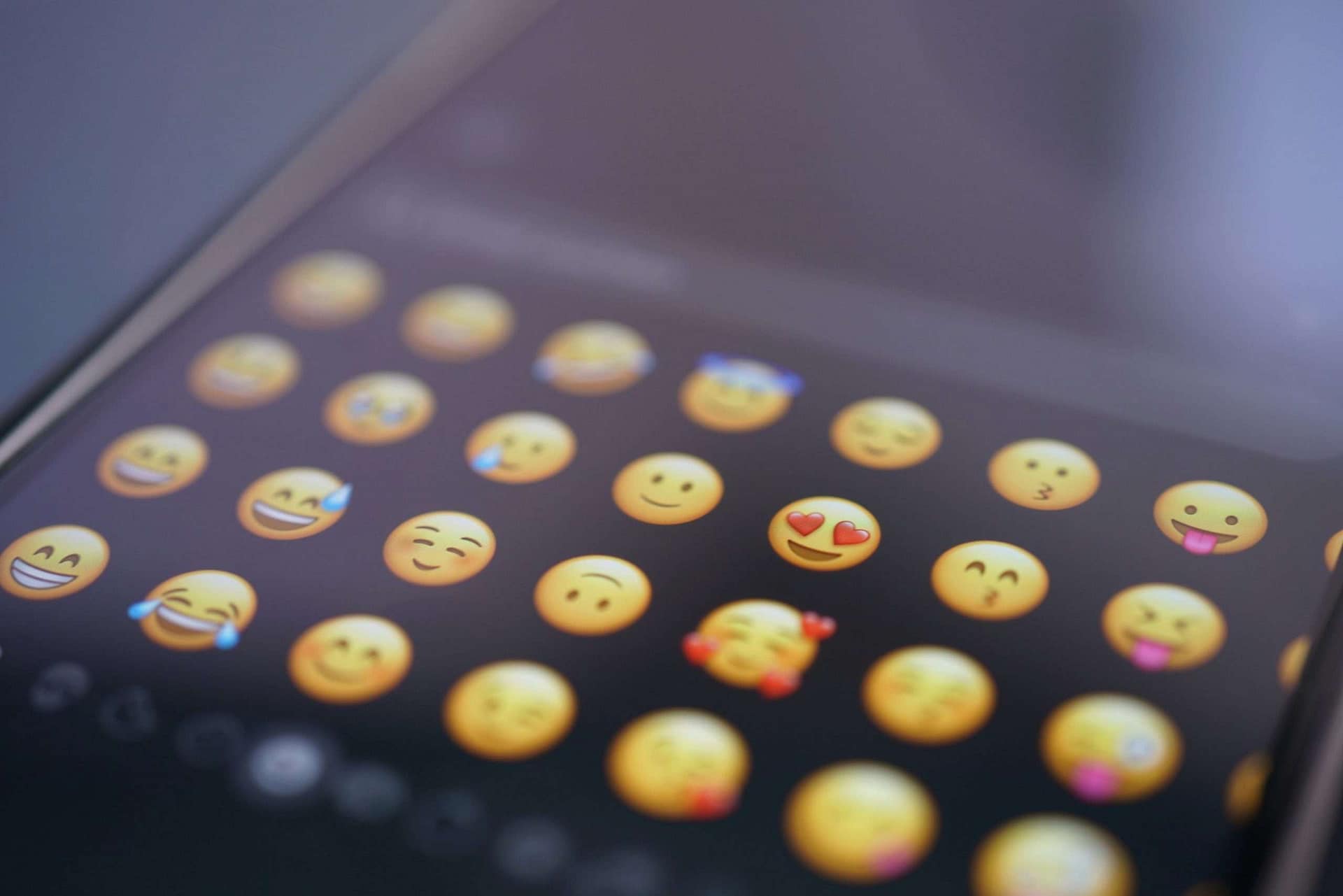
Emojis are pictorial icons — graphic images encoded as Unicode characters — that represent emotions, objects, activities, and more. They emerged later than emoticons, offering a standardized way to express feelings visually across devices.
Historical Origins
The first widely recognized emoji set was created in 1999 by Shigetaka Kurita, a designer for Japan’s NTT DoCoMo. This initial set contained 176 12×12-pixel icons covering emotions, weather, and basic objects. Kurita’s innovation allowed mobile users to convey more information and emotion than text alone could provide.
With the rise of smartphones, emojis became globally standardized via the Unicode Consortium, which ensures they can be used consistently across devices and platforms. However, their visual style varies by vendor, so a smiling face may look slightly different on Apple, Google, or Samsung devices.
How Emojis Are Used
- Graphical selection: Unlike emoticons, emojis are chosen from a palette or keyboard.
- Wide range: Includes facial expressions, food, animals, activities, objects, symbols, and flags.
- Cross-platform support: Because of Unicode encoding, emojis can be sent across devices and apps while maintaining their identity.
- Cultural nuances: Some emojis carry different connotations depending on context, culture, or platform rendering.
For a deeper dive into emoji meanings and interpretations, readers can explore our Emoji Meaning Guide.
Key Differences Between Emoticons and Emojis
| Feature | Emoticons | Emojis |
|---|---|---|
| Construction | Text characters typed manually | Graphical Unicode symbols selected from keyboards |
| Origin | 1982, digital bulletin boards | Late 1990s, Japan (NTT DoCoMo) |
| Examples | :-) , ;-) |
😊 , 😂 |
| Format | Text-based | Image-based |
| Platform Support | Universal (any text environment) | Dependent on Unicode and platform rendering |
| Scope | Facial expressions and simple gestures | Thousands of icons including objects, symbols, foods, animals, and activities |
| Evolution | Rooted in early internet and messaging | Standardized globally and constantly expanding |
In short, emoticons are typed, text-based symbols, while emojis are rendered pictorial icons. One belongs to ASCII and keyboard creativity, the other to Unicode and cross-platform visual design.
Practical Implications for Users, Developers, and Content Creators
Understanding the difference is more than technical trivia. It affects how we communicate and create content in the digital age:
- Messaging apps and UI/UX: Developers need to distinguish between text-based emoticons and Unicode-based emojis when implementing reactions, input support, or formatting.
- Internationalization: Emojis may require special handling for skin tones, gender variants, or cultural symbols, while emoticons are universally text-based.
- SEO and discoverability: Articles, tutorials, or guides that correctly differentiate between emojis and emoticons capture more search traffic. Many users search for “emoji meaning” or “emoticon vs emoji,” so addressing both terms improves reach.
- Accessibility: Emojis may require alt-text or descriptive labels for screen readers, while emoticons are read as text. Correct labeling ensures accessibility compliance.
- Content clarity: Writers, marketers, and technical documentation benefit from using the correct term. Saying “emoji support” versus “emoticon input” avoids ambiguity for readers.
By recognizing these differences, content creators and developers can produce clearer, more accurate, and more user-friendly material.
The Evolution of Digital Expression
The shift from emoticons to emojis represents the evolution of digital communication. Emoticons capture the ingenuity of early internet users, who transformed plain text into expressive symbols. Emojis expand this concept into a fully visual language, incorporating color, design, and a broader range of meanings. Together, they demonstrate humanity’s desire to communicate emotion effectively in digital spaces.
Understanding both forms allows us to appreciate the creativity and technological advances that shape our online interactions. From a simple :-) to a globally recognized 😊, digital symbols continue to evolve, reflecting our cultural and technological progress.
Understanding the Distinction
Emoticons and emojis may appear similar because they both convey emotion and tone in digital communication, but they are distinct in origin, format, and function. Emoticons are text-based creations that emerged from early online message boards and creative keyboard use. Emojis, in contrast, are graphic icons standardized through Unicode, capable of expressing a wide array of ideas beyond facial expressions.
Recognizing the difference matters for anyone who writes about, develops, or uses digital communication tools. It ensures clarity, improves accessibility, enhances SEO, and helps users understand how to properly interpret and implement these symbols. While both are essential to our digital language, each belongs to a different chapter of online communication history, and both continue to evolve with the ways we connect and express ourselves online.