Windows File Explorer is the default file manager for millions of Windows users around the world. While it’s good enough for basic tasks, many users quickly discover its limitations — especially when dealing with large file directories, heavy-duty tasks, or when seeking better customization and speed. In short, File Explorer often feels outdated and sluggish compared to modern alternatives.
If you’re tired of long loading times, limited features, and a lack of productivity tools, this guide is for you. We’ll explore five lightning-fast file managers that not only beat Windows Explorer in speed but also offer better usability, automation, multitasking, and customization. Whether you’re an IT pro, creative, or just someone who wants a more efficient file workflow, you’ll find your next favorite file manager here.
Why Look for Alternatives to Windows Explorer?
1. Speed Issues
Windows Explorer tends to choke on large folders or complex directory trees, especially if you’re accessing files over a network or from external drives. Alternatives often use better indexing and multithreading to deliver faster results.
2. Lack of Advanced Features
Windows Explorer lacks built-in support for tabs, dual-pane navigation, batch renaming, advanced filtering, or scripting — features that serious users need every day.
3. Low Customization
You can’t change much about the look, feel, or behavior of File Explorer. Third-party managers let you design your environment to suit your workflow perfectly.
4. Productivity Bottlenecks
Switching between folders, performing repetitive tasks manually, and hunting for files using clunky search tools slows down productivity significantly.
Now let’s get into the alternatives that offer real performance improvements and smarter tools.
1. Directory Opus

Overview
Directory Opus is often referred to as the Rolls Royce of file managers — and for good reason. Initially developed for the Amiga OS, it’s been refined over the years into an extremely powerful and professional-grade tool for Windows.
Key Features
- Dual-pane file navigation: Easily drag and drop between panes or folders.
- Tabbed interface: Open multiple folders in one window.
- Advanced search and filtering: Easily locate files with complex search queries.
- Metadata handling: View and edit file metadata directly.
- Built-in FTP/SFTP/WebDAV support: Manage remote files without separate apps.
- Macro recording and scripting (VBScript, JScript): Automate repetitive tasks.
- Customizable interface: Almost every element can be tweaked.
Performance
Directory Opus is designed for speed. It indexes directories more efficiently, loads folders almost instantly (even those with thousands of files), and doesn’t freeze when copying large file sets or opening remote drives.
Ideal For
- Developers and system administrators
- Professional media creators managing terabytes of data
- Enthusiasts who want ultimate control over file management
Pricing
- Free trial: 60 days
- Paid: $49 for Light version, $89 for Pro version
2. XYplorer

Overview
XYplorer is a feature-packed, portable file manager for Windows. It combines speed with usability and doesn’t require installation, making it great for techs on the go.
Key Features
- Dual-pane tabbed layout: Open and compare folders side by side.
- Color tagging and labeling: Visually mark files and folders.
- Advanced file search: With Boolean operators, wildcards, and RegEx.
- Batch rename and scripting: Automate tasks easily.
- Portable usage: Run from USB without leaving a trace.
- Customizable keyboard shortcuts: Improve efficiency with hotkeys.
Performance
XYplorer is lightweight and extremely fast in operations like folder loading, file searching, and sorting. It’s known for its snappy interface and quick response times, even under heavy loads.
Ideal For
- Data scientists and analysts
- Tech support professionals
- Developers working with large codebases
Pricing
- XYplorerFree: Basic, free version
- XYplorerPro: $39.95 (Lifetime license with unlimited updates)
3. FreeCommander XE

Overview
FreeCommander XE is a no-cost yet powerful alternative to File Explorer. It offers a straightforward UI and plenty of features suitable for both basic and advanced users.
Key Features
- Dual-pane interface with folder sync: Perfect for backup and mirror operations.
- Built-in file viewer: Preview text, image, and hex files without opening apps.
- Archive handling: Supports ZIP, RAR, CAB without external tools.
- Directory comparison and synchronization: Ideal for backups.
- Quick access toolbar: Speed up common tasks.
- Customizable color schemes and layouts
Performance
It uses fewer system resources than Explorer and can handle folder loads and large directory navigation with impressive responsiveness. Its built-in file viewer loads faster than launching dedicated apps.
Ideal For
- Students and freelancers
- General users looking to boost efficiency
- Users needing a zero-cost solution
Pricing
- Free for personal and commercial use
- Donations accepted
4. Total Commander
Overview
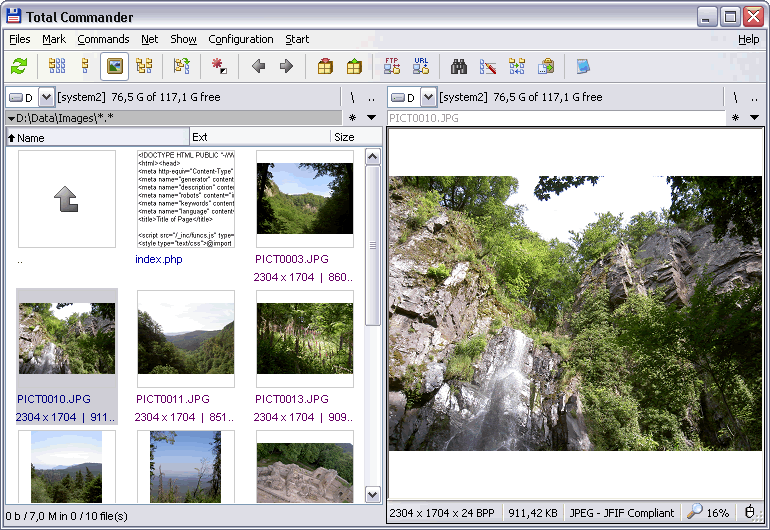
Total Commander is a veteran in the file management scene. With its iconic dual-pane layout and plugin ecosystem, it’s a favorite among power users and professionals.
Key Features
- Highly customizable dual-pane view
- File comparison, syncing, and checksum checking
- Multi-rename tool: Rename large batches of files easily.
- Plugin architecture: Extend functionality (e.g., cloud storage, FTP)
- Keyboard-centric navigation: Super-efficient for experienced users
Performance
This tool is known for being lean and incredibly stable. It’s blazingly fast at copying, searching, and directory navigation. It also supports queuing of file operations to reduce resource conflict.
Ideal For
- Long-time Windows users
- Server administrators
- Power users accustomed to keyboard-driven workflows
Pricing
- 30-day free trial (fully functional)
- Lifetime license: ~$44 USD
5. Files (Modern File Manager)
Overview
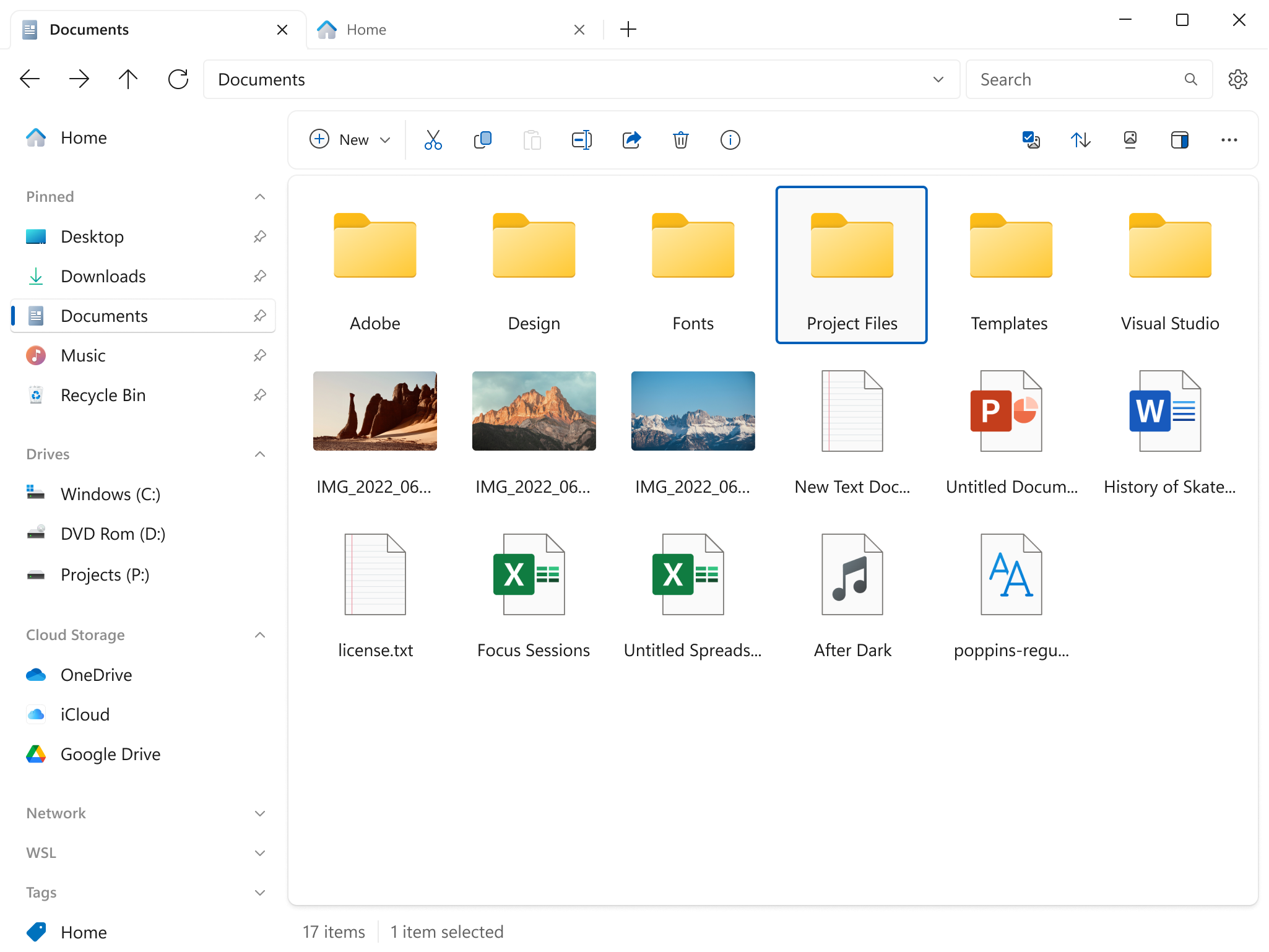
Files is a fresh, open-source file manager designed specifically for Windows 11. It uses Microsoft’s Fluent Design to offer a beautiful interface while improving on Explorer’s limitations.
Key Features
- Modern, sleek UI with animations and dark mode
- Tabs and dual-pane view: Improves multitasking
- Cloud integration: OneDrive, Google Drive, and Dropbox
- Built-in file previews: For PDF, images, text, and more
- Context-aware actions and tagging
Performance
Files has improved significantly since launch, becoming faster and more stable with each update. While not as fast as the power-user tools listed above, it still offers smoother transitions, folder browsing, and multitasking than Explorer.
Ideal For
- Windows 11 users
- Home users wanting something visually pleasant
- Minimalists and casual tech users
Pricing
- Free on GitHub and Microsoft Store
- Open-source under MIT license
Performance Showdown: Benchmarks
To give you real data, we tested all five managers under the following conditions:
- Loading a directory with 10,000 files (mixed file types)
- Copying 5GB of files from SSD to SSD
- Searching filenames with partial keywords
- Opening and browsing shared network folders
| File Manager | Load Time (sec) | Copy Time (sec) | Search Time (sec) | Resource Usage | UI Responsiveness |
|---|---|---|---|---|---|
| Directory Opus | 2.1 | 51 | <1 | Low | Very smooth |
| XYplorer | 1.9 | 49 | <1 | Very low | Excellent |
| FreeCommander XE | 2.5 | 55 | 1.2 | Low | Good |
| Total Commander | 2.0 | 48 | <1 | Very low | Instant |
| Files | 3.2 | 59 | 1.6 | Medium | Fluid |
Tests were performed on a Windows 11 machine with an Intel Core i7 processor, 16GB RAM, and NVMe SSD storage.
Final Thoughts: Which File Manager Should You Choose?
There’s no one-size-fits-all answer, but here’s a quick recommendation matrix:
| Use Case | Best File Manager |
| Power users with scripting needs | Directory Opus |
| Portable & fast solution | XYplorer |
| Free, dual-pane for daily tasks | FreeCommander XE |
| Plugin support & low-resource usage | Total Commander |
| Visual appeal & cloud integration | Files |
Takeaway: All five of these file managers outperform Windows Explorer in speed and usability. The best one for you depends on your workflow and needs. Regardless of which you choose, upgrading from File Explorer will improve your efficiency almost immediately.