Why have an Antivirus?
In today’s day and age, having a good antivirus program is becoming increasingly more important. Not only are malicious actors getting better and better at bypassing what people like to call “common sense protection” (where you simply avoid suspicious programs and links), but even official popular websites can get infiltrated and inject code into your computer without your knowledge. This article will explain the different kinds of antiviruses, what you should be looking for in them, and finally, a list of the top free antivirus programs of 2025 available to you.
What to keep in mind when selecting an antivirus
There are a few different functions that antiviruses serve, and not every antivirus fulfills every function at once. Antiviruses can provide real time protection to your computer, scan your computer for any viruses or malware, and there are even some antivirus software that specialize in finding specific kinds of malware like rootkits, adware, and ransomware. There are even some antiviruses that are browser extensions, making sure that nothing can infiltrate your computer while browsing the internet.
However, that doesn’t mean you can just fill your computer up with every antivirus out there to keep it as safe as possible. If multiple antiviruses try to operate on the same resource, they’ll interfere with each other, resulting in them not working or, at worst, even causing crashes on your PC. There are a few antiviruses out there that are classified as a “second opinion scanner”, which means they’re designed to have no functions outside of scanning your computer so they can be used alongside your main antivirus.
There is another important criteria to keep in mind known as Real World Protection. Malicious software are an ever increasing threat, due to their nature constantly changing to circumvent protection. Real world protection means that the antivirus has enough real-time protection to keep you safe as you do things that any normal person will do. While no antivirus can truly protect against viruses that aren’t in the database yet, the best ones will update as often as possible. A closely related subsection of this is Advanced Threat Protection, which protects against active hackers.
This is in contrast to Malware Protection, which doesn’t cover malware that attack from the web, but instead covers scenarios where the malware is already inside the computer or network. Malware protection will stop viruses from executing their attacks and quarantine them before they cause damage.
There is also the concept of “False Positives”, which is when a computer mistakenly identifies a file as a virus and tries to remove it. If the file happened to be important to a program running, following the antivirus’s recommendation will effectively turn that program into useless, dead space. The higher quality an antivirus is, the less often false positives will occur.
Lastly, you need to keep in mind how much of your computer’s resources an antivirus uses. A “heavy” antivirus will use a lot more of your computer’s resources and slow your computer down, in exchange for more thorough protection. A lighter antivirus will have minimal effect on your computer, but have a lower detection rate. A balance is an important factor in picking the best antivirus.
List of the best free Antiviruses in 2025
5. Avira Free Security
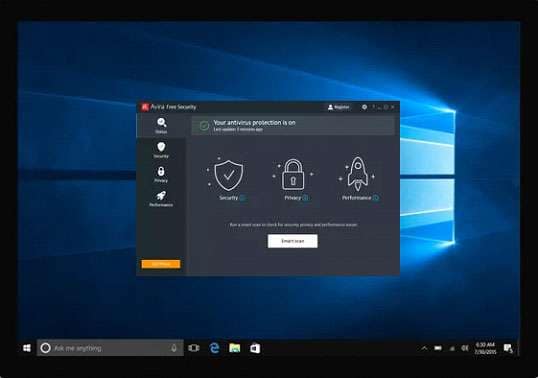
Avira Free Security is a solid choice for an antivirus. It has top of the line Real-World Protection and extremely solid Performance and Malware Protection as well. However, while it’s competitive in the real-world protection department, it unfortunately comes up short in the other areas when compared to some of the other antiviruses on this list. Most notably, it doesn’t boast any anti-hacking protection whereas the others on the list do.
4. AVG AntiVirus Free
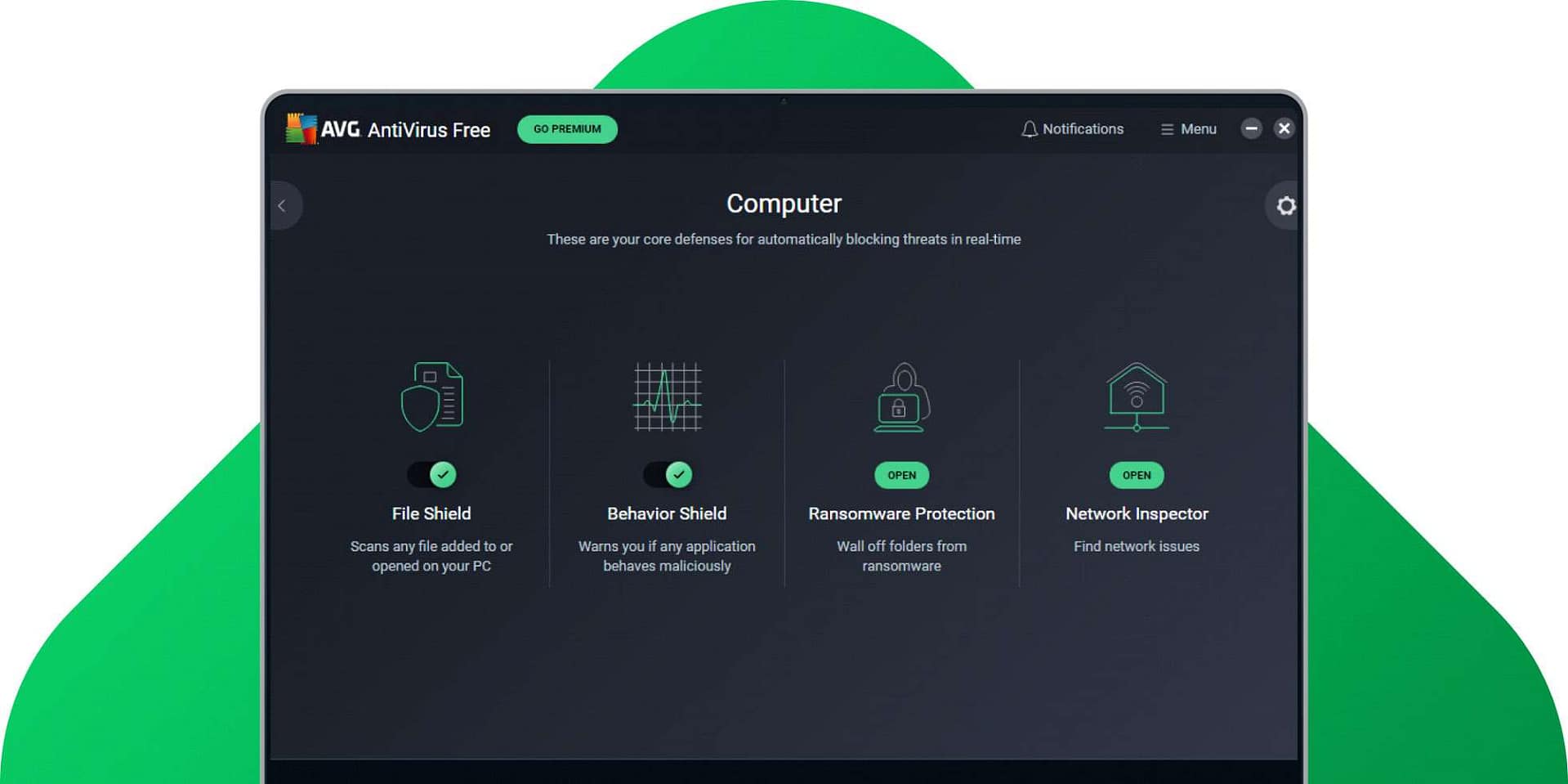
AVG Antivirus Free offers some fantastic performance, being one of the few antiviruses that had no noticeable impact on my system speed while also boasting extremely good real-world protection and malware protection. The client has a minimalist and well designed homepage as well, and you can choose exactly what kind of scan you want to run on your computer if you know exactly what you want from the program.
However, the program does fall a bit behind the others in terms of protecting against hackers, and also has the lowest malware protection rate and highest false positives of all the antiviruses on the list, boasting “only” 99.92% protection rate and 10 false positives. Both of these functions are still above most antiviruses, however.
3. Avast Free Antivirus
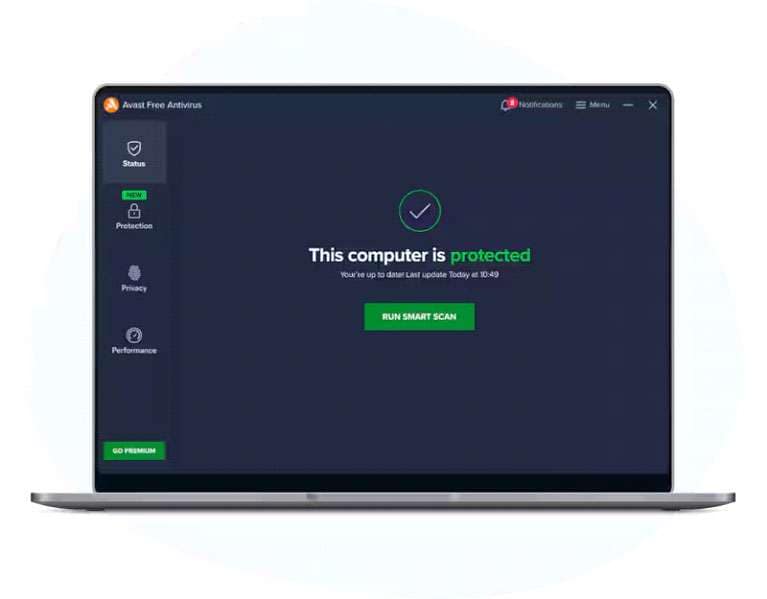
Avast Free Antivirus, alongside AVG Antivirus Free (which it acquired in 2016), boasts minimal impact on your system’s performance. It also has above average effectiveness in terms of Real-World Protection, while still having some pretty impressive protection against malware and hacks. Its interface is very similar to its contemporary, AVG Antivirus Free, in terms of being clean and how it lets you manage multiple malware detections through a single information box.
However, it does have some flaws. Its defense against hacking and malware protection are both lower than others on the list. It ends up being slightly better overall than AVG Antivirus Free, but lower than others on this list. On top of that, it’s best to be aware that the company doesn’t have the best reputation due to some shady dealings it had a few years back before it was forced to stop.
2. Bitdefender Antivirus Free
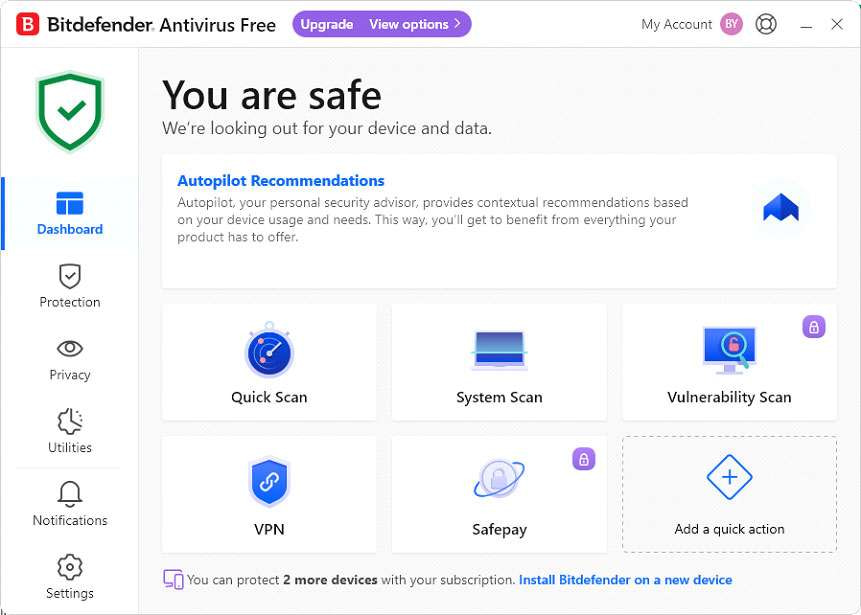
Bitdefender Antivirus Free is an option that’s consistently been near the top of the game. It offers among the industry best for malware protection, while offering some fantastic real-world protection. Its interface is extremely clean and user-friendly, as it compresses multiple malware alerts into a single alert box while also structuring all pertinent information into easily digestible tabs. You can also customize the home page and various scan options if you want more control over the program. As Bitdefender Antivirus Free also protects IOS and Android devices, the interface is also extremely touch friendly.
However, there is one very noticeable area in which it falters. Opening and closing applications takes noticeably longer than it does for other antiviruses. While most antiviruses optimize itself to recognize that the program isn’t problematic on subsequent launches and thus lets it open faster, Bitdefender Antivirus Free doesn’t have any noticeable speed difference on subsequent launches. This means that the performance hit of this program is a little more noticeable than the other programs on the list.
1. Kaspersky Free
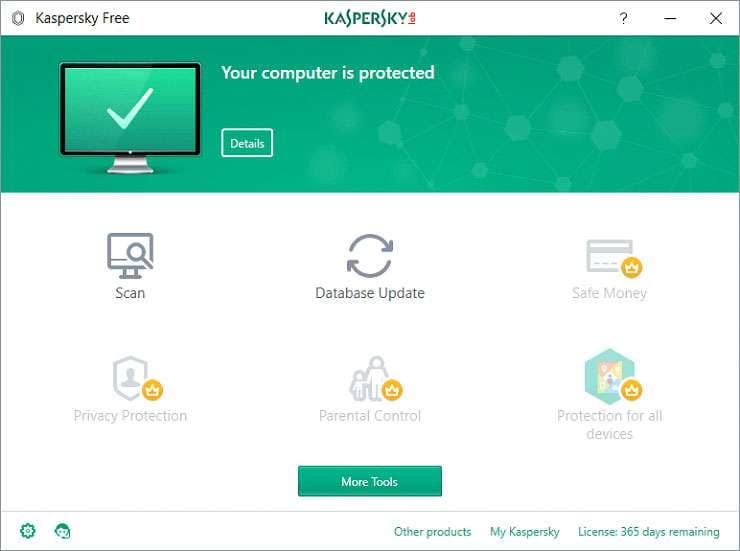
Kaspersky Free has a long history and has the technical prowess with it.It has the least amount of false positives out of any antivirus, some fantastic malware protection, some of the best defense against hackers and minimum impact on the system’s performance. Its database is also robust enough to be able to detect malware that the other antiviruses tend to miss. The UI is modern and has a tiled interface that makes it easy to find all the essential features, and advanced users will find a wide range of configuration options.
However, it does fall slightly behind when it comes to real-world protection, with it coming in last of all the antiviruses on this list (but still top of the line). There is another noticeable downside of Kaspersky Free – if you live in the United States, you won’t be able to download it.
Comparing the Antiviruses against each other
Now that I’ve listed all of the antiviruses out, it’s time to properly compare them using the criteria listed out earlier: Performance, Real World Protection, Advanced Threat Protection, and Malware Protection. The list was made by cross-referencing data from a few different AV comparison websites.
Performance:
As a reminder, this category goes over how much of a performance impact these antiviruses have on your computer while they’re running.
- AVG Antivirus Free does very well when it comes to performance, with there being minimal performance hit.
- Avast Free Antivirus also has similar performance optimization as AVG Antivirus Free, which isn’t that surprising considering that they’re both part of the same company.
- Bitdefender Antivirus Free has the most noticeable performance hit when it comes to launching applications. More importantly, it doesn’t get better on any subsequent runs, which is out of the ordinary as antiviruses usually adapt as they go. In this category, Bitdefender Antivirus Free even comes up short of Microsoft Defender.
- Kaspersky Free is noticeable for being extremely light, with there being pretty much no performance hit at all. It’s easily the best out of all of these.
- Avira Free Security brings up the middle of the pack, having slightly less performance hit than BitDefender Free, but still weaker than the other three options.
Summary: From best to worst in the Performance category, we have Kaspersky Free, Avast Free Antivirus, AVG Antivirus Free, Avira Free Security and then Bitdefender Antivirus Free bringing up the distant rear.
Real World Protection:
This category measures how well an antivirus keeps you protected as you go about your daily life, keeping you protected from methods such as infected web pages, installing rogue software or opening emails with malicious attachments. However, the program might hit you with some false positives that could stop you from using useful programs.
- AVG Antivirus Free is great at blocking malicious software, but is a little overzealous in its efforts, having the most false positives of the bunch.
- Avast Free Antivirus fares better than AVG Antivirus Free when it comes to false positives, and actually has roughly the same when it comes to actually blocking the software.
- Bitdefender Antivirus Free is better than both Avast Free Antivirus and AVG Antivirus Free when it comes to false positives, while boasting the same performance as them when it comes to actual protection.
- Kaspersky Free has by far the least false positives of the bunch. In exchange, however, it falls behind when it comes to actual protection, letting a few more malicious actors through than the others. However, it is notable in that it caught a few viruses that the other anti-viruses all missed.
- Avira Free Security has only slightly less false positives than Avast Free Antivirus and AVG Antivirus Free, but still has slightly more than Bitdefender Antivirus Free. However, it has the best performance of the bunch when it comes to keeping your computer safe.
Summary: This category is a little more complex. Generally, the less false positives there are, the less effective they are at protecting your computer. Kaspersky Free has the least false positives but let more malware through on average. Out of the more protective antiviruses, Avira Free Security has slightly more false positives than BitDefender Antivirus Free but is more protective, with Avast Free Antivirus and AVG Antivirus Free bringing up the rear.
Advanced Threat Protection:
This criterion covers how well the program will protect you from targeted cyber-attacks by hackers that employ a variety of techniques to attack you. Keep in mind, a vast majority of users on their private computers won’t be actively under threat of a targeted attack and those that are under threat normally wouldn’t be looking at free options for their protection. That said, this category is still worth looking at.
- AVG Antivirus Free does fairly well in terms of threat blocking but still comes up short of the other options available save for Avast Free Antivirus. Detections mostly occurred before the infiltration occurred but had a slip where it only detected a hack after it was executed.
- Avast Free Antivirus has pretty much the exact same performance as AVG Antivirus Free does, even having the same level of detection when it comes to picking up on them pre- and post-execution.
- Bitdefender Antivirus Free does better than both AVG Antivirus Free and Avast Free Antivirus when it comes to detection, and all of its detection comes before the code executes or as it executes.
- Kaspersky Free fares roughly the same as Bitdefender Antivirus Free does when it comes to protection, but it caught one post execution as preferred to pre and on. There was also one instance where it stopped an execution, but didn’t notify the user.
- Avira Free Security unfortunately doesn’t boast any protection against hackers. While most everyday users won’t be dealing with targeted cyber-attacks, this is still worth noting.
Summary: In terms of Advanced Threat Protection, Bitdefender Antivirus Free is the best here, followed by Kaspersky Free, then with AVG Antivirus Free and Avast Free Antivirus being tied together at last.
Malware Protection:
This criterion focuses on catching malware that’s already in the system, scanning USBs, network drives, or at worst, when they’re actively on your disc wreaking havoc already.
- AVG Antivirus Free is fairly middle of the pack when it comes to false positives but brings up the rear at “only” 99.92% protection rate when it comes to actual malware.
- Avast Free Antivirus fares roughly the same as AVG Antivirus Free but performs slightly better at protecting the system with 99.93% protection rate.
- Bitdefender Antivirus Free brings up the rear in terms of false positives, but is the best at protecting the system, with a 99.98% protection rate.
- Kaspersky Free has easily the least false positives but fares worse than Bitdefender Antivirus Free at a 99.95% protection rate.
- Avira Free Security has a middling amount of protection but has the most false positives by far, making it bring up the rear in this comparison.
Summary: While it’s similar to real world protection in terms of balancing false positives and protection, the choice here is actually a little clearer. Kaspersky Free has the least amount of false positives and boasts a pretty good protection rate while Bitdefender Antivirus Free has the best protection rate at the cost of being overzealous. AVG Antivirus Free and Avast Free Antivirus bring up the middle of the pack in terms of false positives but also have the lowest protection rate in general. Avira Free Security has a middling level of protection, just somewhat better than Avast Free Antivirus and AVG AntiVirus Free, but has by far the most false positives.
Here’s a table that roughly summarizes the comparisons we just made: 1 being the being the best and 5 being the worst.
| Kapersky Free | Avast Free Antivirus | AVG Antivirus Free | Avira Free Security | Bitdefender Antivirus Free | |
| Real-Time Protection | Least false positives, lets the most through | Solid false positives and protection | Slightly more false positives than Avast | Highest protection, but most false positives | Less false positives than AVG and Avast, more protection |
| Malware Protection | Good protection, least false positives | Lowest protection rate and middling false positives | Similar to Avast | Most false positives, solid protection | Best protection rate, most false positives |
| Ads | Occasional | Frequent | Frequent | Moderate | Minimal |
| System Impact | Best performance | Decent performance hit | Slightly better than Avast | Second worst | Worst performance hit |
| Platform Availability | Windows, Mac, iOS, Android | Windows, Mac, iOS, Android | Windows, Mac, iOS, Android | Windows, Mac, iOS, Android | Windows only |
| User Interface | Simple and clean | A bit cluttered | Similar to AVG | User-friendly | Very clean |
| Best For… | Balanced Overall Protection | Feature-rich but ad-heavy | Very similar to Avast but with slightly better protection | Light and feature-rich with extras | Set-and-forget lightweight AV |
| VPN | Separate and limited | Separate and limited | Separate and limited | Included, limited use | Separate and limited |
| Scan Now Option | Yes | Yes | Yes | Yes | Yes |
The Best Antivirus
While it isn’t the best at everything, Bitdefender Antivirus Free ends up as the best in terms of overall protection, so long as you don’t mind performance hits when you’re opening up files. If that does bother you, then Kaspersky Free is the runner-up, as despite its real-world protection being lacking, it has the least false positives and it’s nothing that a second opinion scanner won’t catch. Of the other antiviruses, Avira Free Security is worth a look if you want the best real-world protection possible. Both AVG AntiVirus Free and Avast Free Antivirus are strong options compared to most antiviruses but unfortunately have nothing standing out when compared to others on this list.
Whatever choice you make, we hope that the article has helped you understand what antiviruses do and what you should be looking out for when selecting an antivirus.